BNP Paribas
“Young talent” 2026
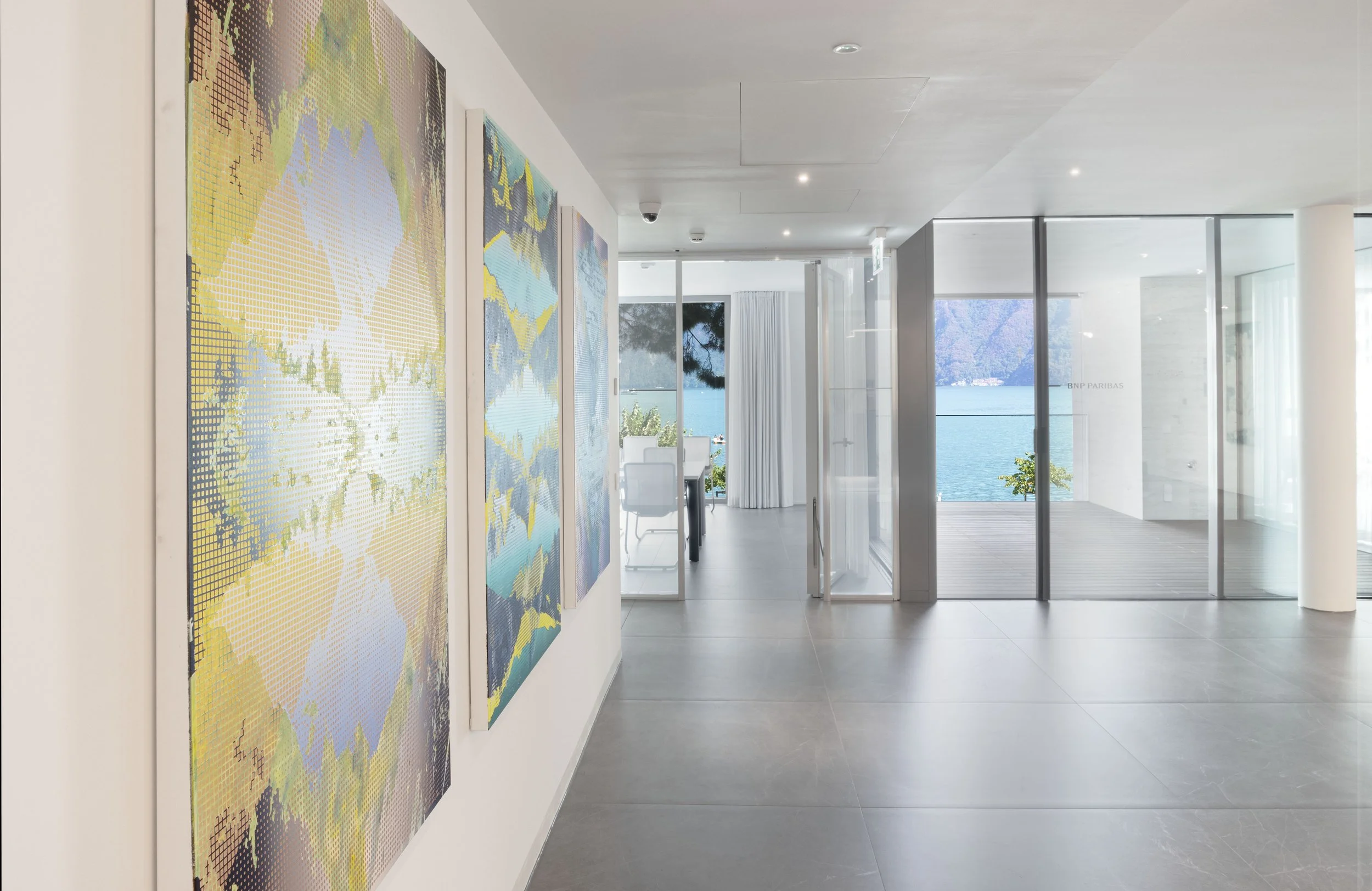
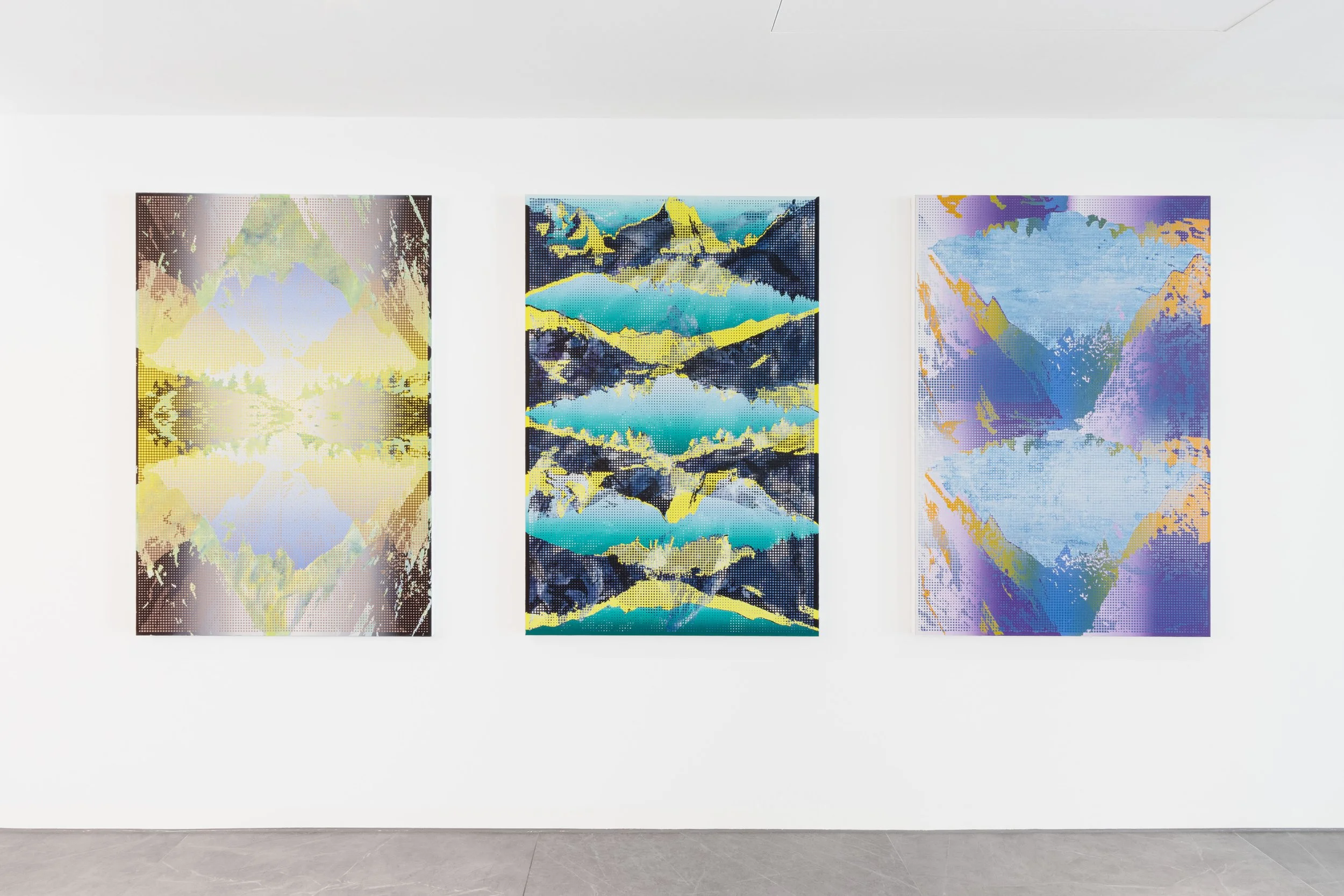
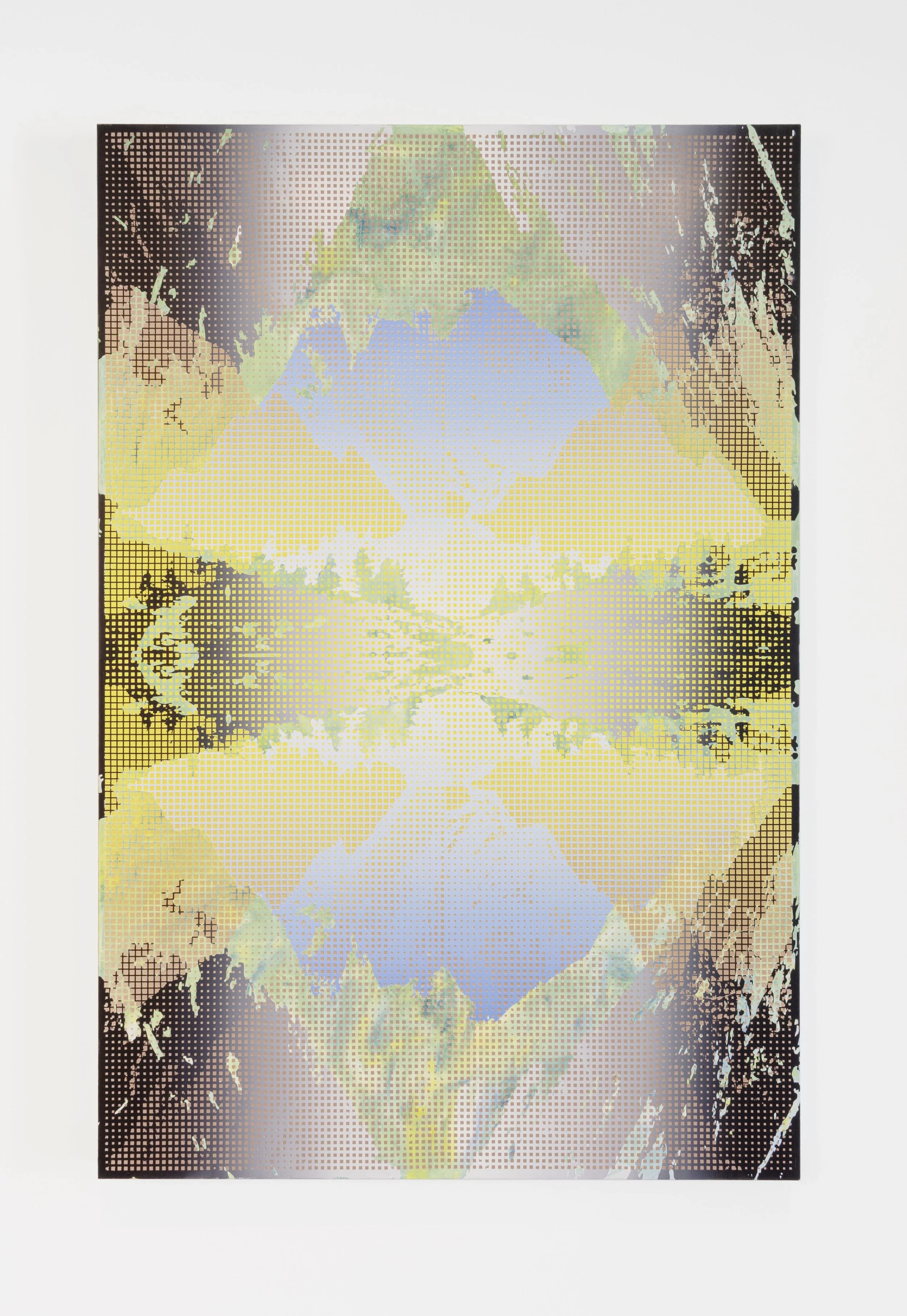
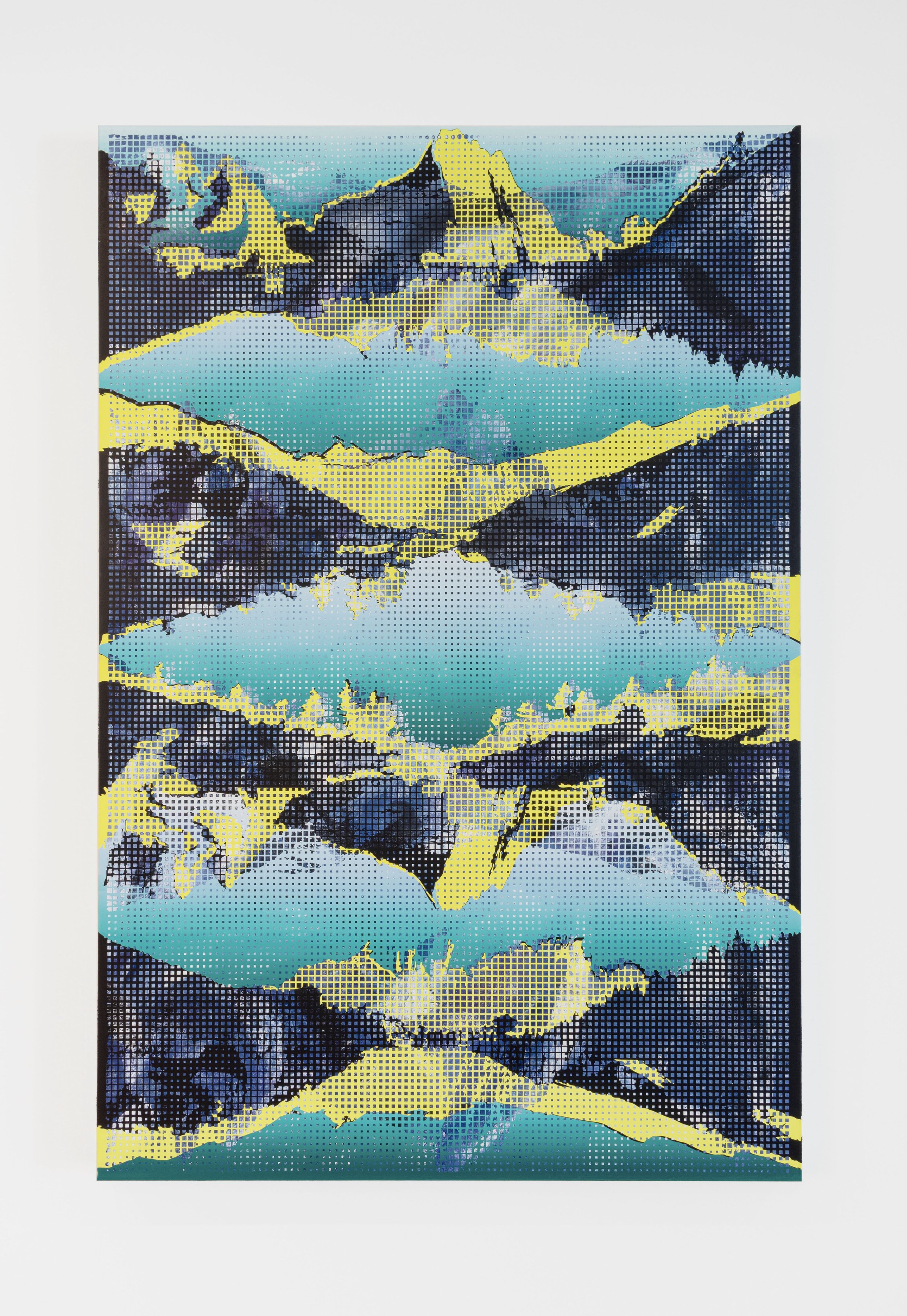
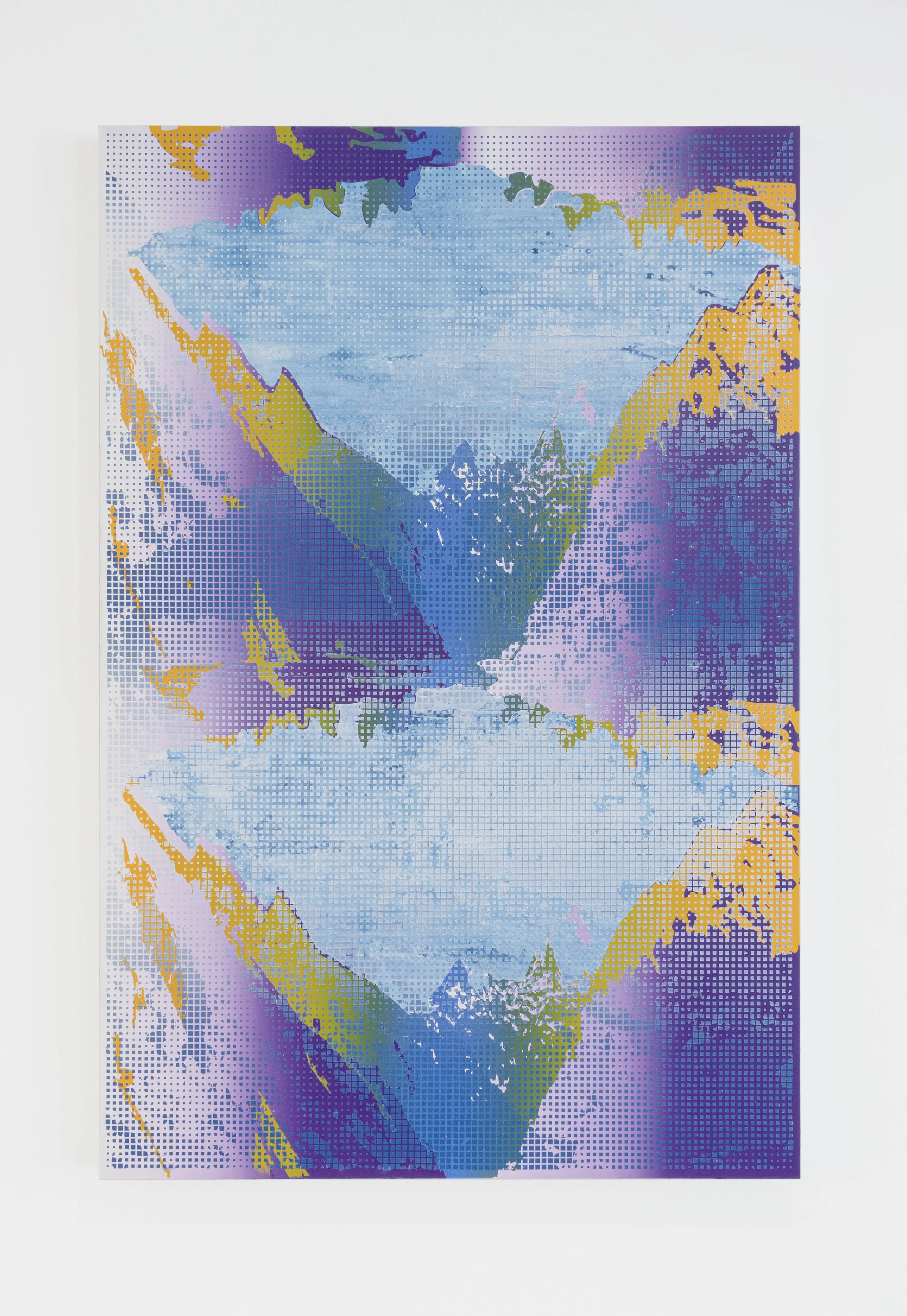
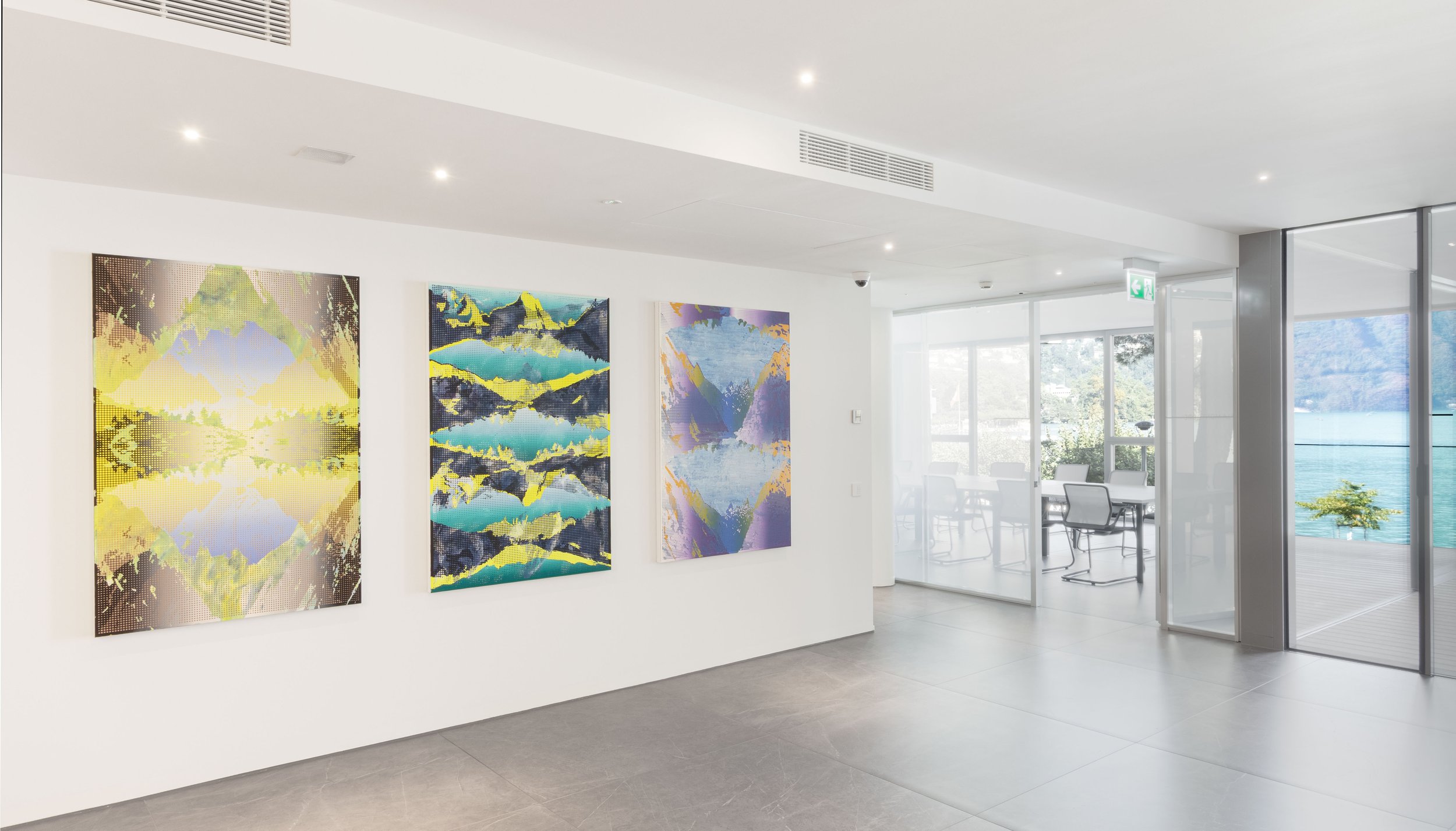
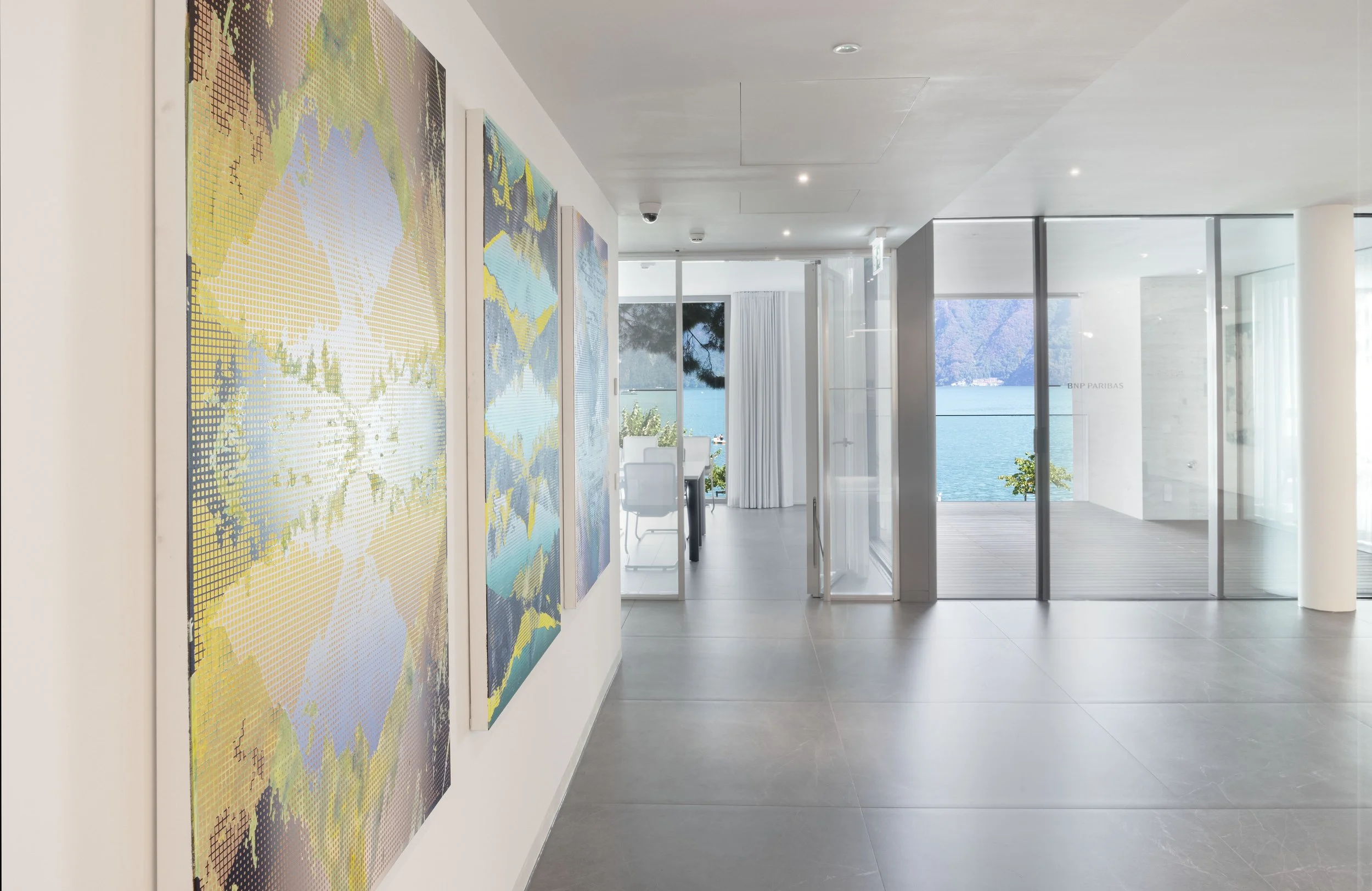
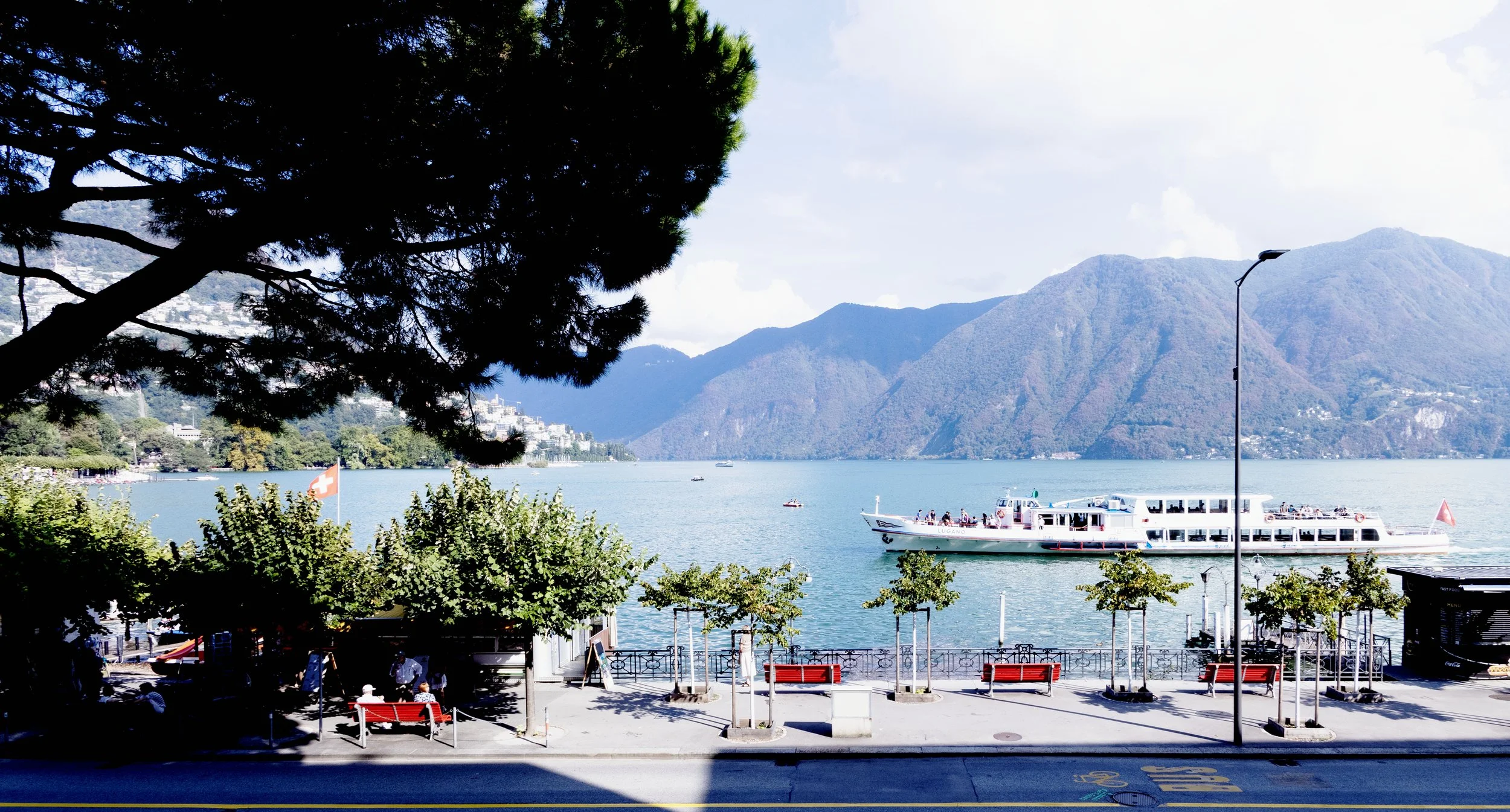
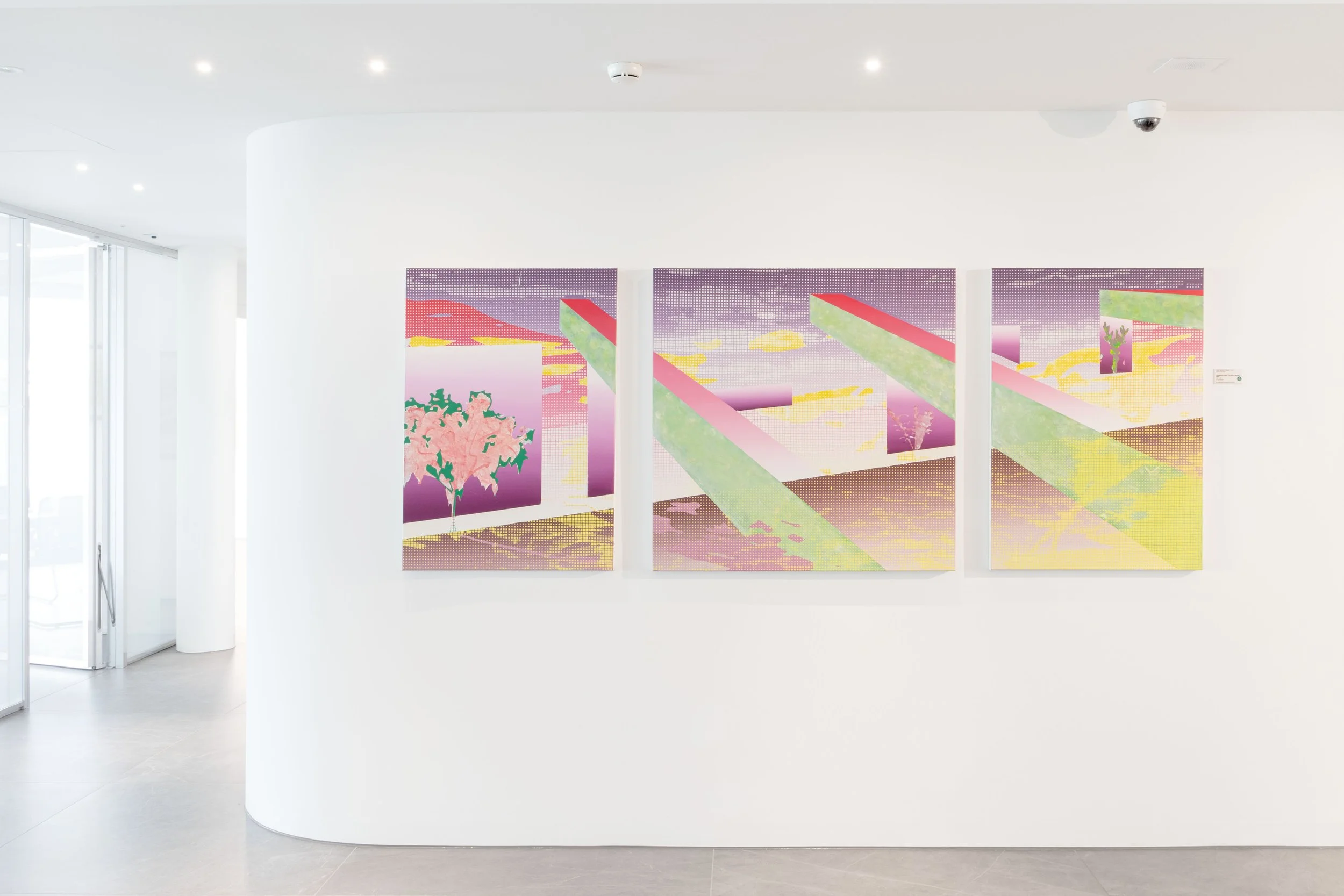
Following my selection as a ‘Young Talent 2026’ by the Swiss BNP Paribas Foundation, one of my works (Installation view — Chiostro) was auctioned in aid of the Ticino Foster Families Association; whilst three other inedited works from the ‘Intersection’ series were presented on 3 September at the BNP office in Lugano.
ITA
Questi lavori nascono da un’idea di specularità, già presente nella serie Intersection e qui portata in primo piano. Qui il termine “epifania” è inteso suo senso più letterale, come manifestazione, apparizione. La specularità non è quindi soltanto un principio compositivo o un raddoppio formale, ma diventa una modalità attraverso cui l’immagine si manifesta. Nel riflettersi e nel ripetersi, ciascuna parte sembra attestare l’esistenza dell’altra: l’immagine specchiata e il “modello” si validano reciprocamente, quasi fossero l’uno per l’altra un segno di vita.
Mi ha sempre colpito la nostra capacità di continuare a stupirci davanti ad un’alba o ad un tramonto. Non sono fenomeni rari: accadono ogni giorno. Eppure conservano una particolare intensità, forse perché occupano solo una breve porzione di tempo in una giornata. Ad ogni modo, la ripetizione non sembra consumarne l’apparizione.
Penso che qualcosa di simile accada con un dipinto. Anche davanti a un’opera che amiamo non trascorriamo necessariamente ore: ma possiamo tornarci continuamente, soffermandoci ogni volta soltanto per pochi minuti. Il valore di quell’esperienza non dipende allora dalla sua durata né dalla sua eccezionalità, ma dalla possibilità che qualcosa di già visto continui ogni volta a riapparire.
In questo senso il raddoppio presente in questi recenti lavori non vuole produrre semplicemente due immagini uguali o simili. Mi interessa piuttosto quel piccolo scarto che si crea tra ripetizione e apparizione: vedere nuovamente qualcosa che conosciamo e accorgerci che, proprio perché ritorna, non è mai del tutto identico a ciò che avevamo visto prima.
Mi è sempre piaciuta l’idea di capolvogere un Monet.
UST, 03.09.2026
ENG
These works stem from an idea of mirroring, already present in the Intersection series and brought to the front here. The initial reference is Intersection — Epiphany; here, the term ‘epiphany’ is understood in its most literal sense, as a manifestation or apparition. Mirroring is therefore not merely a compositional principle or a formal duplication, but becomes a means through which the image manifests itself. In reflecting and repeating itself, each part seems to attest to the existence of the other: the mirrored image and the ‘model’ validate one another, almost as if each were a sign of life for the other.
I have always been struck by our ability to continue to be amazed by a sunrise or a sunset. They are not rare phenomena: they happen every day. Yet they retain a particular intensity, perhaps because they occupy only a brief moment in the course of a day. In any case, their repetition does not seem to diminish their impact.
I think something similar happens with a painting. Even when looking at a work we love, we do not necessarily spend hours on it: but we can return to it time and again, lingering each time for just a few minutes. The value of that experience does not, then, depend on its duration or on its exceptional nature, but on the possibility that something we have already seen continues to reappear each time.
In this sense, the doubling present in these recent works is not simply intended to produce two identical or similar images. I am rather interested in that slight discrepancy that arises between repetition and appearance: seeing something we know again and realising that, precisely because it returns, it is never quite identical to what we had seen before.
I have always liked the idea of turning a Monet upside down.
UST, 03.09.2026